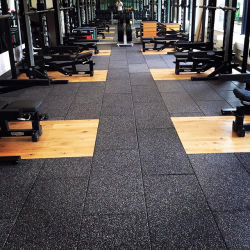
 When you need flexible flooring solutions for your space, rubber tile flooring can be the solution you are looking for. Rubber materials are known for their flexibility properties and are used in many places today. What is rubber? In our article, you can find a lot of information such as how rubber emerged, rubber history, rubber history, rubber usage areas and rubber production.
What is Tile Rubber?
Tile rubber materials arise from the production of small parts of the rubber product by pressing in a square shape with adhesive and bonding materials, which are special and have no negative effects on health. Rubber tiles are obtained in two different ways as EPDM rubber tile and SBR rubber tile floor material. SBR material is generally obtained in the form of granules obtained from recycling. Customer preferences vary according to the usage area. Especially SBR tile rubber flooring material is preferred outdoors.
Rubber tile materials are obtained from SBR, that is, Styrene Butadiene Rubber, which constitutes more than 50% of the rubbers produced in the world. It is much more affordable when compared to other rubber materials due to both its wide production in the world and its production costs. What is SBR rubber? You can find all the details in our article.
Rubber Tile Floor Features
Rubber tiles are known for being flexible and soft. With these features, it is shock absorber. It prevents injuries in falls.
It is durable and long lasting.
Easy assembly and disassembly.
It is non-slip, non-stick, heat-resistant and does not burn easily.
It has properties that provide heat and sound insulation.
With its water permeability feature, it does not leave water on and inside.
There is no harm to the environment and health.
It is resistant to all weather conditions.
It appeals to its users with different color and thickness alternatives. It is used for aesthetic appearance in landscape applications.
It is also easy to apply because it is obtained in a square shape.
It can be adhered to concrete floors and floors such as asphalt with two-component polyurethane-based adhesives. It can also be applied to sand floors.
They are generally produced in sizes of 40 cm x 40 cm and in thicknesses such as 20 – 25 – 30 mm.
While SBR rubber tile floors are produced with red, green, black and gray color options; EPDM rubber tile floor products have a wide range of color options.
Rubber Tile Usage Areas
Rubber tile flooring is used in parks because it minimizes the risk of injury in falls with its flexibility and impact resistance feature. It has many advantages with its color and pattern options, especially in children’s playgrounds, school gardens, kindergartens and kindergartens, retirement homes.
It is used in gyms to give a softer pressing feeling, to make gymnastic movements more comfortable, and to eliminate the impact of weight on the floor in places where weights are practiced.
It is used in terraces, gardens, jogging paths to give a nice feeling of walking. It is also used in shooting ranges because it minimizes the sound and impact sensation, and in animal shelters and outdoor sports fields because it can adapt to all kinds of weather conditions. It is especially used in basketball, football and volleyball areas within the site.
Apart from this, it can be used in many areas such as traffic training tracks, garage and apartment entrances, rehabilitation centers.
Rubber Tile Floor Prices
As we mentioned above, rubber floor covering is available in different sizes and with different raw material properties. It has a much easier and faster application method than other floor covering products. Therefore, their cost is lower than other floor coverings. Rubber tile floor prices are generally determined on the basis of pricing the granules obtained from the recycling of sbr products.
 Flooring Systems